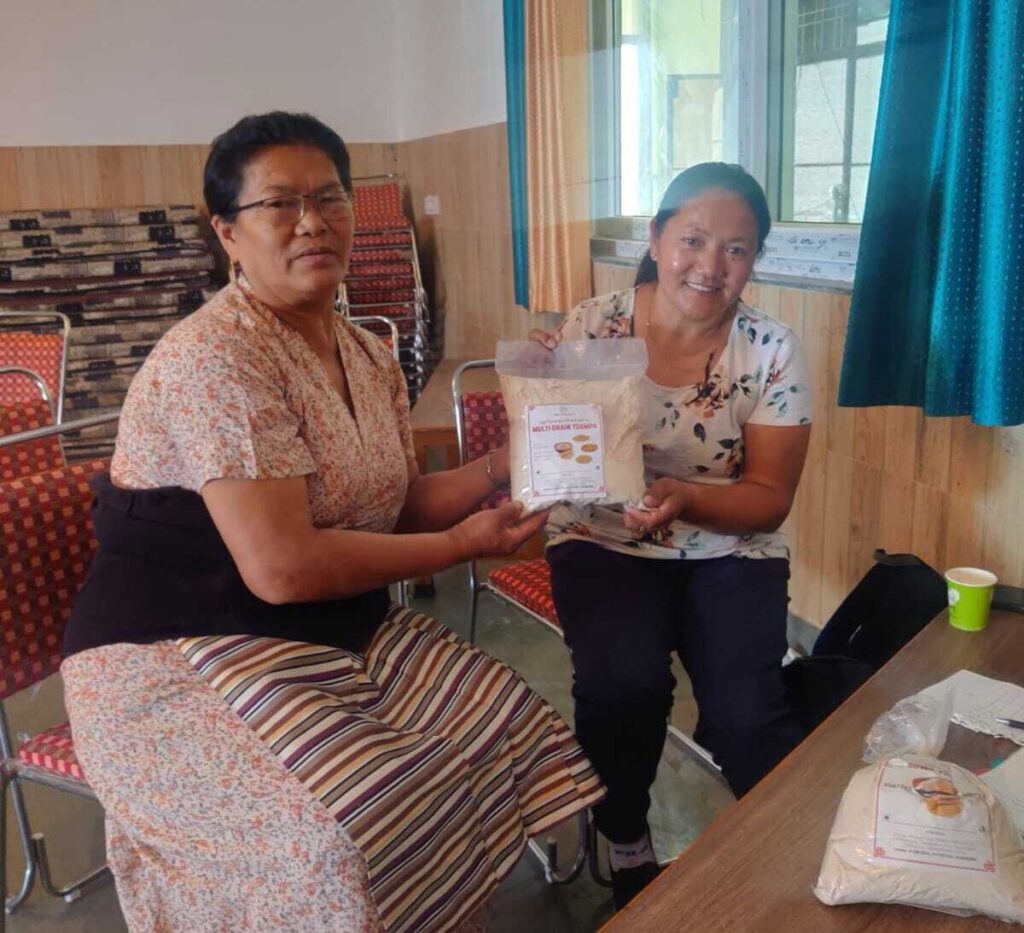
Three Tibetan women in Herbertpur settlement, Choekyi (66 years old), Tsering Bhuti (61), and Tenzin Yangzom (42), sustained their families by selling tsampa (roasted barley flour). Having fled Tibet without access to education or vocational skills, their options for making a living were limited. Tragically, both elder women became widows, exacerbating their challenges. Tsampa production and sales became their sole means of livelihood.
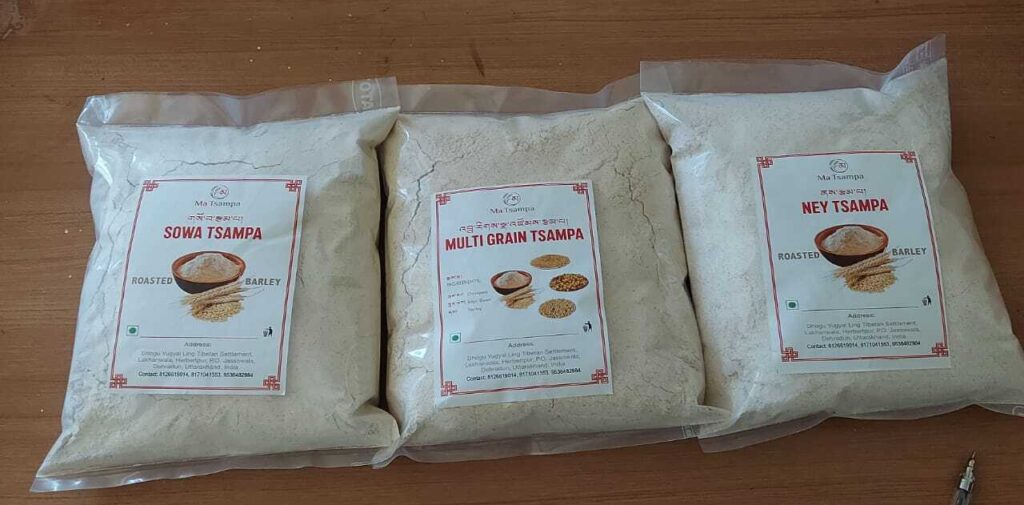
Despite their efforts, each faced constraints in market reach and production capacity, due to the labor-intensive nature of making tsampa. However, a timely intervention through the Tibetan Women Microentrepreneurship Project united these determined women to establish Ma Tsampa, a collective venture that reshaped their futures. Ma Tsampa received new equipment for roasting, cleaning, and grinding from the project, cutting down production time from 13-hour shifts to just over six hours. The women also acquired new skills in bookkeeping, machine handling, packaging, and marketing, enhancing their efficiency and product appeal. A new vacuum sealing machine has prolonged product shelf life, leading them to explore fresh market avenues, and they have expanded their product line by adding two new varieties of tsampa. They have also begun selling khapsey (traditional Tibetan cookies) during festivals.
Ma Tsampa has witnessed steady growth in orders, sales, and income, with profits evenly distributed among the three partners. Beyond financial success, their collective venture embodies empowerment, unity, and resilience. Tenzin Yangzom, Tsering Bhuti, and Choekyi transcended individual adversities, joining forces for collective prosperity.