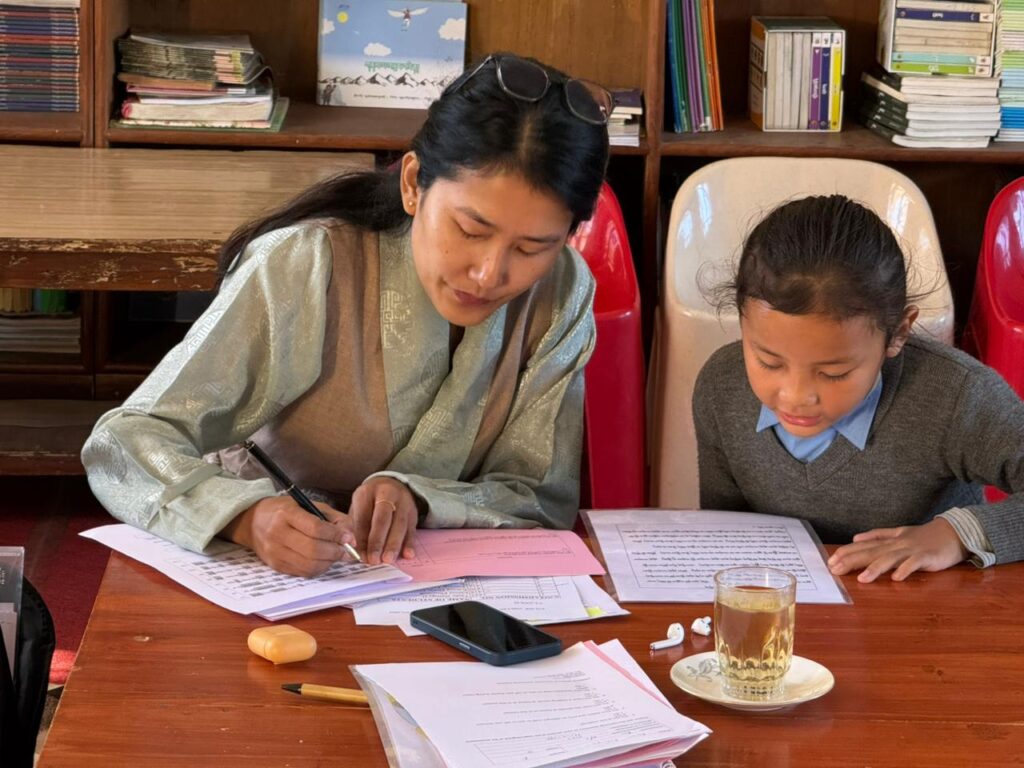
For almost a month, from November 10th to December 5th, I traveled across Tibetan communities with our team as we carried out a baseline assessment of early grade reading. We visited 16 schools in total. In each one, I sat down with young children and listened as they read aloud in Tibetan. Listening to each child read and watching their unique strengths and challenges emerge, was both grounding and inspiring. What struck me most was how different each school’s reality was. Some had a large number of non-tibetan students, which clearly affected the overall reading proficiency. Others struggled with large class sizes. In some schools, limited parental involvement made it harder to build steady children’s reading habits while in others a stronger support system at home made a noticeable difference.
We also visited seven daycare centers where we met more than 50 parents to share our work on early child care and education. We gathered feedback, conducted a satisfaction survey and learned more about how these centers are supporting families. Their parents’ insights were honest, encouraging, and incredibly valuable. Many expressed deep gratitude for the centers, but they also raised important concerns, especially around staff to child ratios and the welfare and benefits of caregivers, which remain major challenges across several settlements.
For me, field experiences like this are deeply meaningful. They remind me of how far we’ve come and how much further we can go. Each visit offered a clearer picture of the real impact of our programs and the areas where we can continue to grow.
As part of The Tibet Fund, I feel grateful for the opportunity to witness our work up close. It gives me a deeper insight into the realities, strength and the needs of the communities we serve.