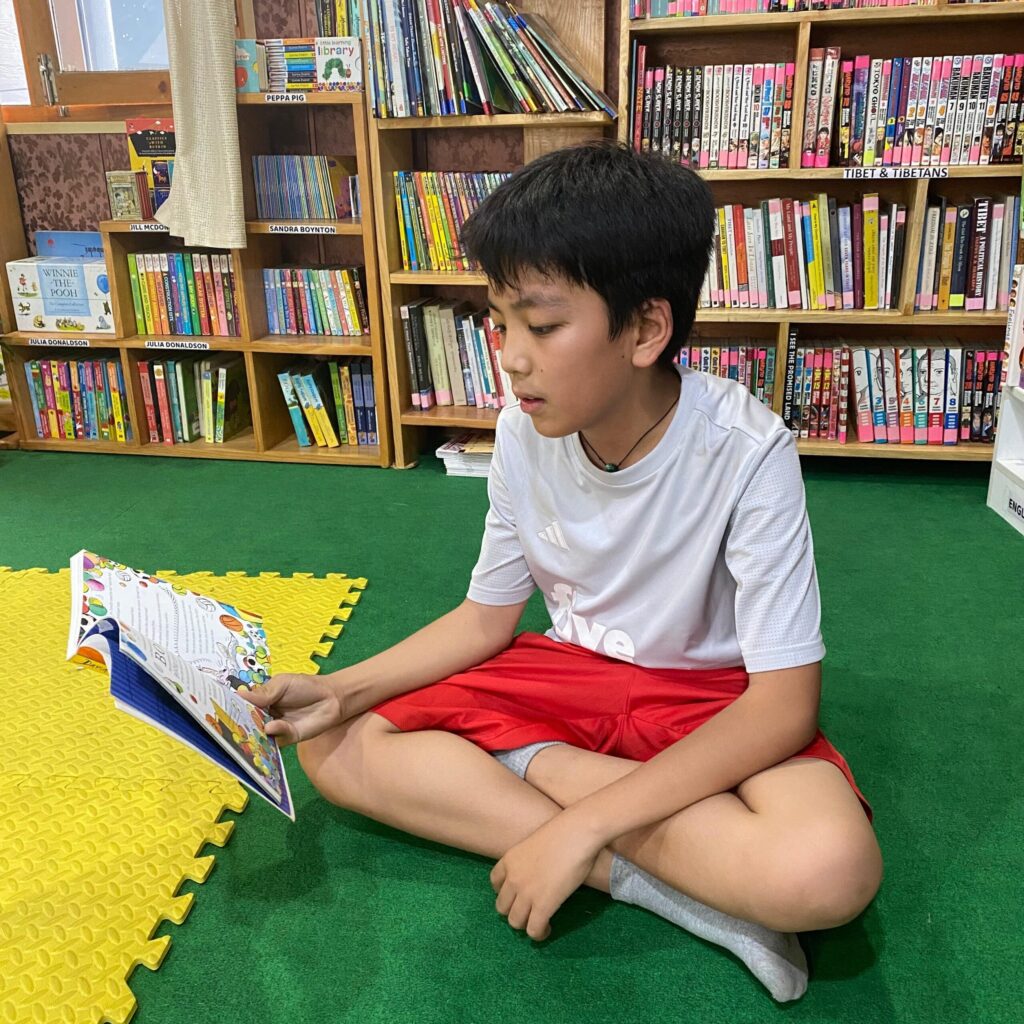
EARLY CHILDHOOD LITERACY PROGRAM
Mother tongue literacy is crucial for the next generation of Tibetan children in exile to maintain their cultural identity and values. Studies show it also leads to better learning outcomes for multilingual students throughout their education. Just as importantly, healthy brain development in early childhood is crucial for lifelong learning. By supporting Tibetan language literacy and healthy cognitive growth for children aged 0-12, this program ensures they begin their education with confidence, curiosity, and a strong sense of who they are, equipping them to thrive academically, preserve their heritage, and contribute to community resilience later in life.
We focus on reading readiness, emotional wellbeing, creativity and creating supportive environments where children can explore language and learning with confidence and curiosity. These efforts have included training educators, installing reading corners in classrooms, and distributing more than 570,000 children’s books across 61 Tibetan schools.
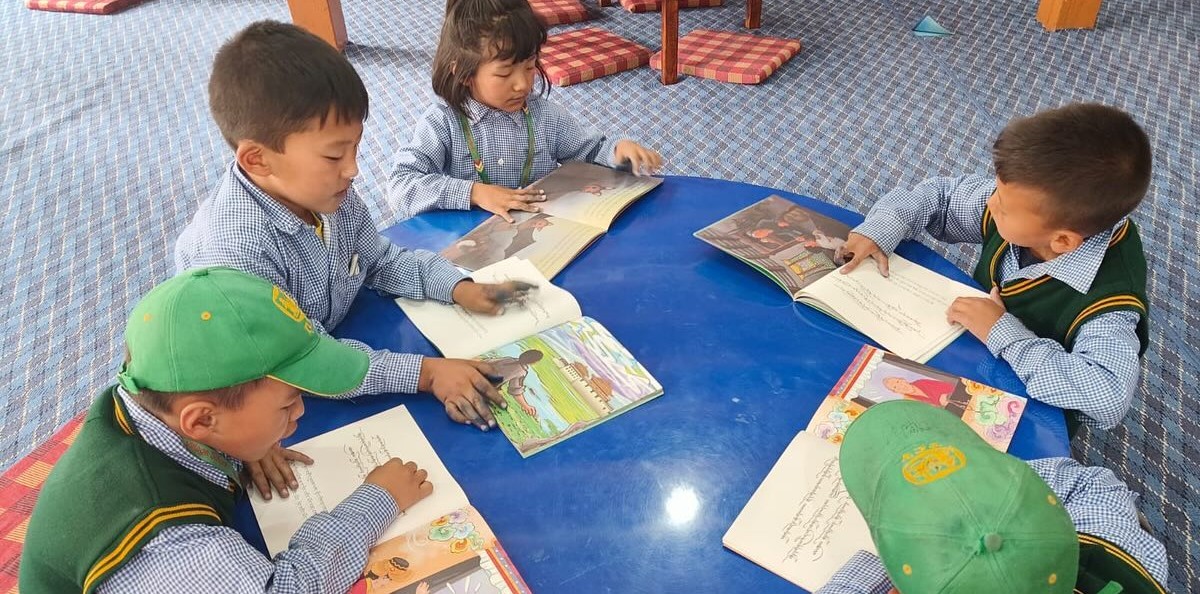
Over 80 early childhood centers have been strengthened through teacher training, improved learning materials, and nutritious meals. Community libraries and parents benefit from workshops and educational resources that promote positive parenting and reading at home.
The impact has been remarkable. Since we began this initiative in 2017, Tibetan reading comprehension among primary children in Tibetan schools has more than doubled.
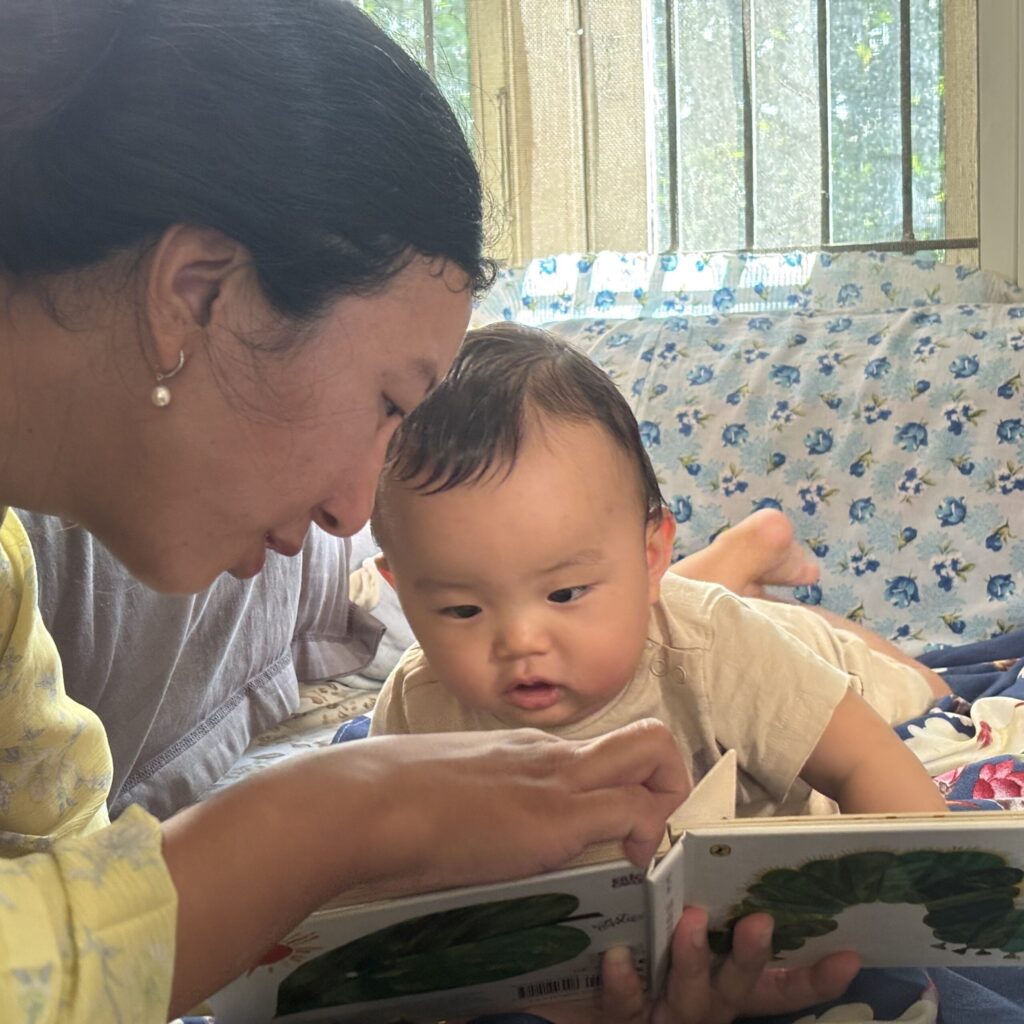
Tenzin Saldon, a new mother and teacher in Bylakuppe, South India, discovered the importance of early childhood care and development through a parenting workshop. Inspired, she and her husband created a small home library and began reading to their eight-month-old son from the very start and making books a natural part of his environment.
“After our son was born, we made intentional changes—talking, singing, being outdoors, and reading with him daily. We also chose a screen-free home, and at eight months, he is calm, curious, and responsive. Programs like this are vital, especially for new parents with limited access to such guidance.”